
What Is Nail Fungus? Symptoms, Causes and Podological Care
What is nail fungus?
Nail fungus is a common nail problem, particularly affecting toenails, that may alter the nail’s colour, thickness and structure. Yellow, white or brownish discolouration, thickening, brittleness, an uneven surface and changes in shape may occur.
Not every nail change is caused by fungus. Trauma, pressure, unsuitable footwear and certain dermatological conditions may produce a similar appearance. Professional assessment is therefore important when changes are noticed.
What are the signs of nail fungus?
Possible signs include yellow, white or brown discolouration; thickening of the nail plate; brittleness or crumbling; an uneven surface; debris beneath the nail; separation from the nail bed and changes in nail shape. Professional assessment may be appropriate when one or more of these signs are present.
What may cause nail fungus?
Damp, enclosed environments may increase the risk. Wearing closed shoes for long periods, persistent moisture and shared showers, pools or changing areas may contribute. Nail trauma, pressure and changes in nail structure may also create conditions in which nail problems develop.
Is nail fungus contagious?
Some fungal infections can spread from person to person. Shared slippers, towels, shoes and personal care tools may present a risk. Avoiding shared personal items and maintaining good foot hygiene are important precautions.
Not every nail change is fungus
Yellowing or thickening should not automatically be assumed to be fungal. Trauma, pressure, unsuitable footwear and some dermatological conditions can cause similar changes. A professional assessment helps identify the appropriate care plan.
What is podological nail care?
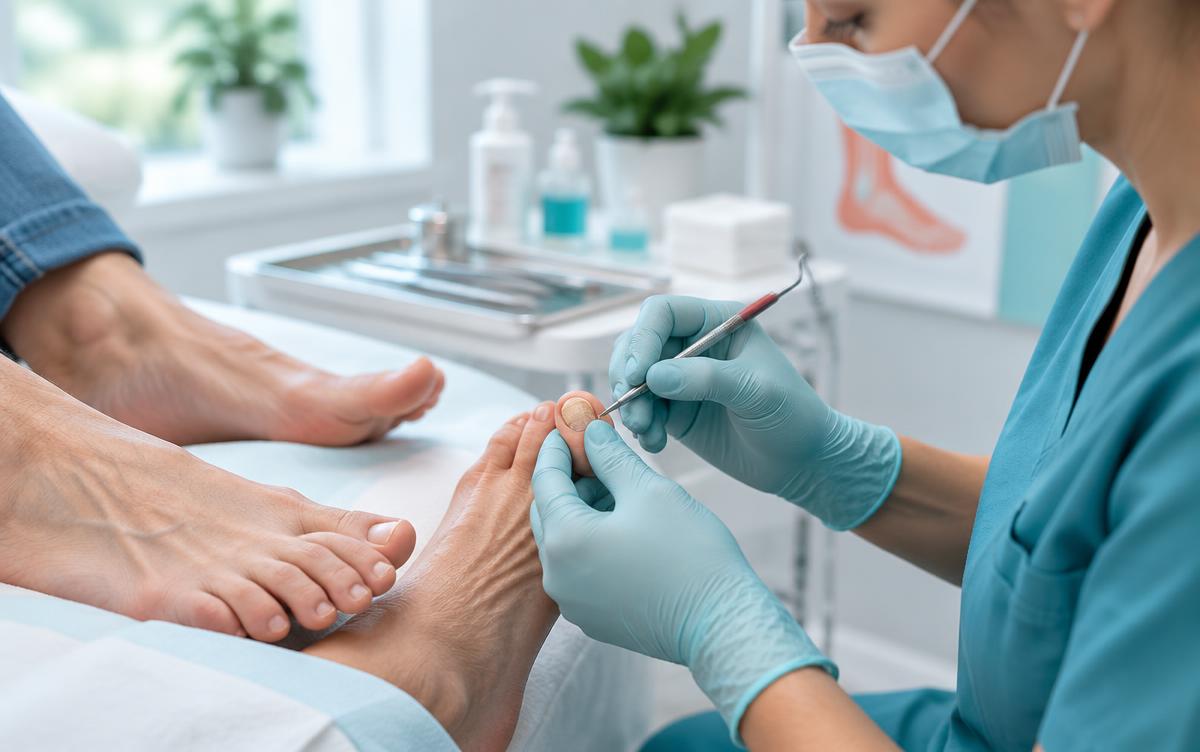
Podological care includes assessing the current condition of the feet and nails and carrying out suitable care. Depending on the nail, a podologist may trim it appropriately, professionally reduce excess thickness, clear debris beneath it, assess the surrounding area and provide personalised home-care advice.
Podological care is not a diagnosis or medication-based treatment. Referral to dermatology or another relevant healthcare professional may be recommended when needed.
How can the risk be reduced?
Keeping the feet and spaces between the toes dry, changing socks regularly, choosing well-fitting breathable shoes, not sharing personal care tools and paying attention to hygiene in communal areas may help reduce risk.
Should the nail be treated at home?
Cutting too deeply, scraping, pulling at the nail or attempting untrained treatment may damage the surrounding tissue. Professional assessment is preferable for thickened or misshapen nails.
Frequently asked questions
How can nail fungus be recognised?
Discolouration, thickening, brittleness, surface irregularity and debris beneath the nail may raise suspicion. Because these findings can occur with other nail conditions, professional assessment remains important.
Does podological care hurt?
Discomfort varies according to nail thickness, the current condition and individual sensitivity. Care is performed in a controlled way suited to the person, but no procedure can be guaranteed to be completely pain-free.
Can nail fungus clear on its own?
This depends on the cause of the nail change. Since not every nail problem is fungal, accurate assessment should come first.
Does podological care eliminate a fungal infection?
Podological care focuses on mechanically managing and caring for the nail. When fungal infection is suspected, an appropriate health assessment is required and referral to a relevant healthcare professional may be made.
When should you see a podologist?
Professional assessment may be helpful when persistent discolouration, marked thickening, breakage, distortion or separation from the nail bed is noticed. Early assessment can support an appropriate care plan.
Do not neglect foot and nail health
If you notice changes in colour, thickness, strength or shape, seek professional assessment rather than attempting aggressive treatment yourself. Foot and nail health is an important part of everyday comfort.
Important information
This article is for general information only. The cause of nail changes varies from person to person. Diagnosis and any necessary medical assessment must be made by an authorised healthcare professional according to the individual situation.
Author
Çiğdem Haznedar
Podologist · Clinical Foot Health Specialist
With many years of clinical podology experience, she designs individual care plans for diabetic foot care, ingrown toenails, nail brace (orthonyxia) and callus–wart treatments.
- BSc in Podology · Continuous clinical education and certification
- 10+ years of clinical podology experience
- Ministry-Licensed
- Akşemsettin Mh., Sarıgüzel Cd. No: 34/2 34080 Fatih/Istanbul
Join the foot-health newsletter
Monthly care reminders and expert tips delivered to your inbox.
We only use your email for care reminders and new content. You can unsubscribe anytime.